
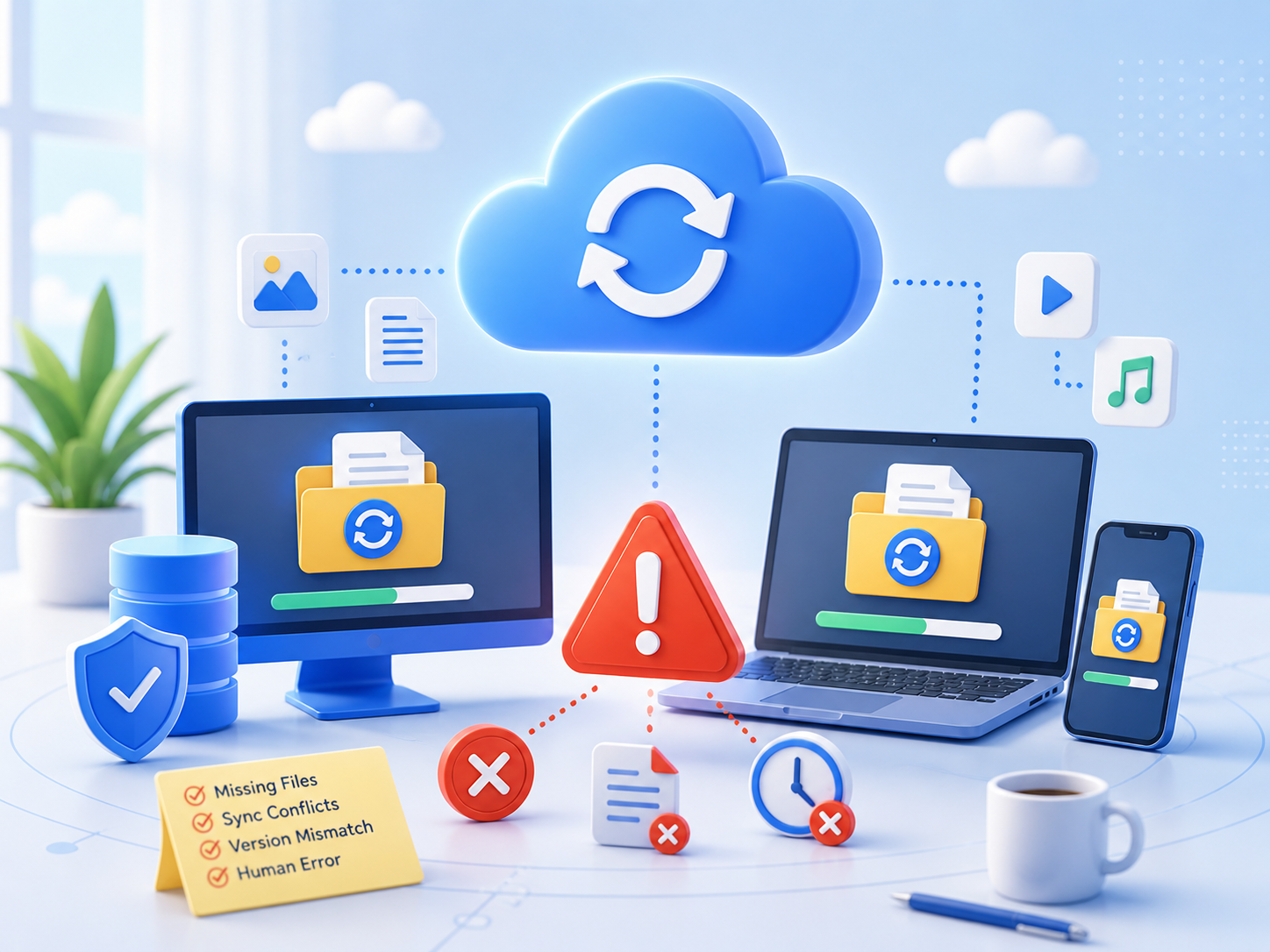
It is easy to assume synchronized data is safe data. In reality, sync and backup solve different problems.
Sync is not the same as recovery
Synchronization keeps copies of files aligned across devices and cloud locations. That is helpful for collaboration and convenience, but it does not always protect you from accidental deletion, corruption, ransomware, or overwriting the wrong version.
If a bad change syncs everywhere, the speed of synchronization becomes part of the problem.
A business needs a recovery plan
Proper backup thinking includes questions like:
- How far back can we recover?
- How quickly can we restore operations?
- Are historical versions retained long enough?
- What happens if an account is locked, deleted, or compromised?
These are operational questions, not just storage questions.
Keep the policy simple and explicit
For many small and midsize businesses, the goal is not to build a complicated enterprise backup program. It is to create a clear policy that separates:
- live working data
- synchronized convenience copies
- true backup and retention
That distinction reduces risk and makes recovery decisions easier during stressful moments.